
About Brainspotting
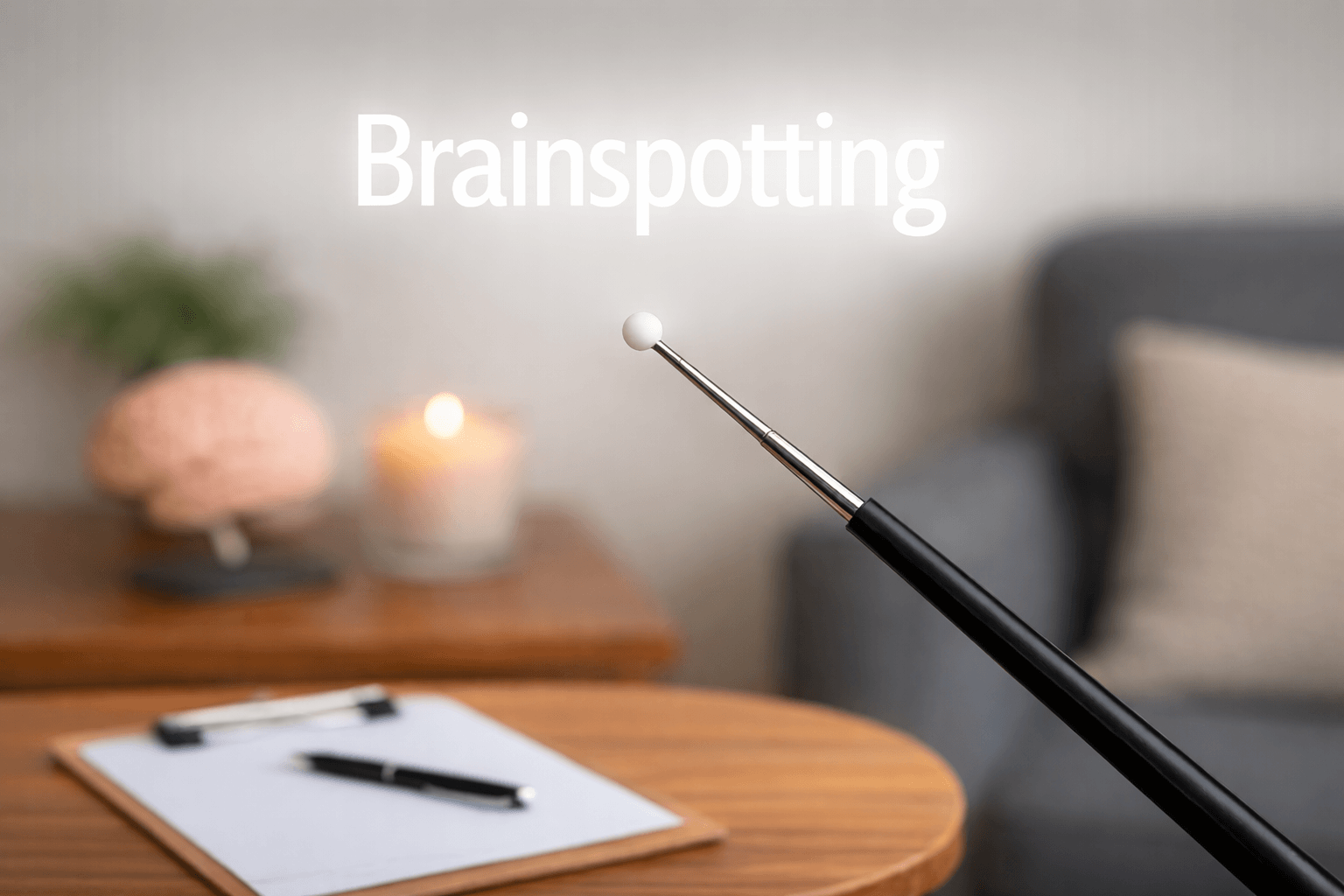
Brainspotting is a therapy that works with both the brain and body to help process experiences that may feel unresolved or stuck. It was developed by David Grand, PhD within trauma treatment and is now used to support concerns such as anxiety, depression, grief, trauma, and performance challenges. Instead of focusing only on talking, Brainspotting uses specific eye positions known as “brainspots” to access deeper parts of the brain involved in emotion and survival responses. This can support processing in a way that feels more direct and less reliant on retelling painful details. Many people experience it as a focused, calming approach that helps them connect with and work through what’s beneath the surface.
How Brainspotting Works
During a Brainspotting session, you and your therapist identify an area of focus, such as a memory, emotion, or physical sensation. As you tune into your internal experience, your therapist helps you find a point in your visual field that feels linked to what you’re noticing. This point, or brainspot, is believed to connect to neural pathways related to that experience. You then hold your gaze there while allowing thoughts, sensations, or emotions to naturally unfold. Your therapist provides support throughout to help you stay grounded and regulated. Over time, this process can help the nervous system reorganize and release patterns that have been held in place.
What a Session Feels Like
Sessions are typically calm, steady, and more focused on your internal experience than on conversation. You remain in control throughout, with the ability to guide the pace and pause at any time. You can choose to talk through what you’re noticing or process more quietly, whichever feels most comfortable for you. Your therapist will support you in noticing what’s happening in your body and mind, without pushing you to go further than feels right. You don’t need to describe everything in detail for the work to be effective. Many people notice a sense of release, increased clarity, or greater calm following a session.
Is Brainspotting Right for You?
Brainspotting may be a good fit if you’ve talked about something but still feel stuck, overwhelmed, or reactive. It can be especially helpful if you notice strong body responses like tension, shutdown, or anxiety that don’t fully make sense in the moment. Because it works with both the mind and body, it can support healing from a wide range of experiences, including those that are hard to put into words. Your therapist will work with you to make sure the process feels safe, paced, and aligned with your needs.